Nail Care Tips: How to Get Healthy Strong Nails
Great manicures start before polish — with healthy nails underneath. These nail care tips cover the complete routine: daily habits, strengthening treatments, cuticle care, breakage fixes, and the mistakes quietly ruining your nails. Whether your nails peel, break, or just won’t grow, this guide rebuilds them from the base up.
The Daily Non-Negotiables
1. Oil Your Cuticles Every Day
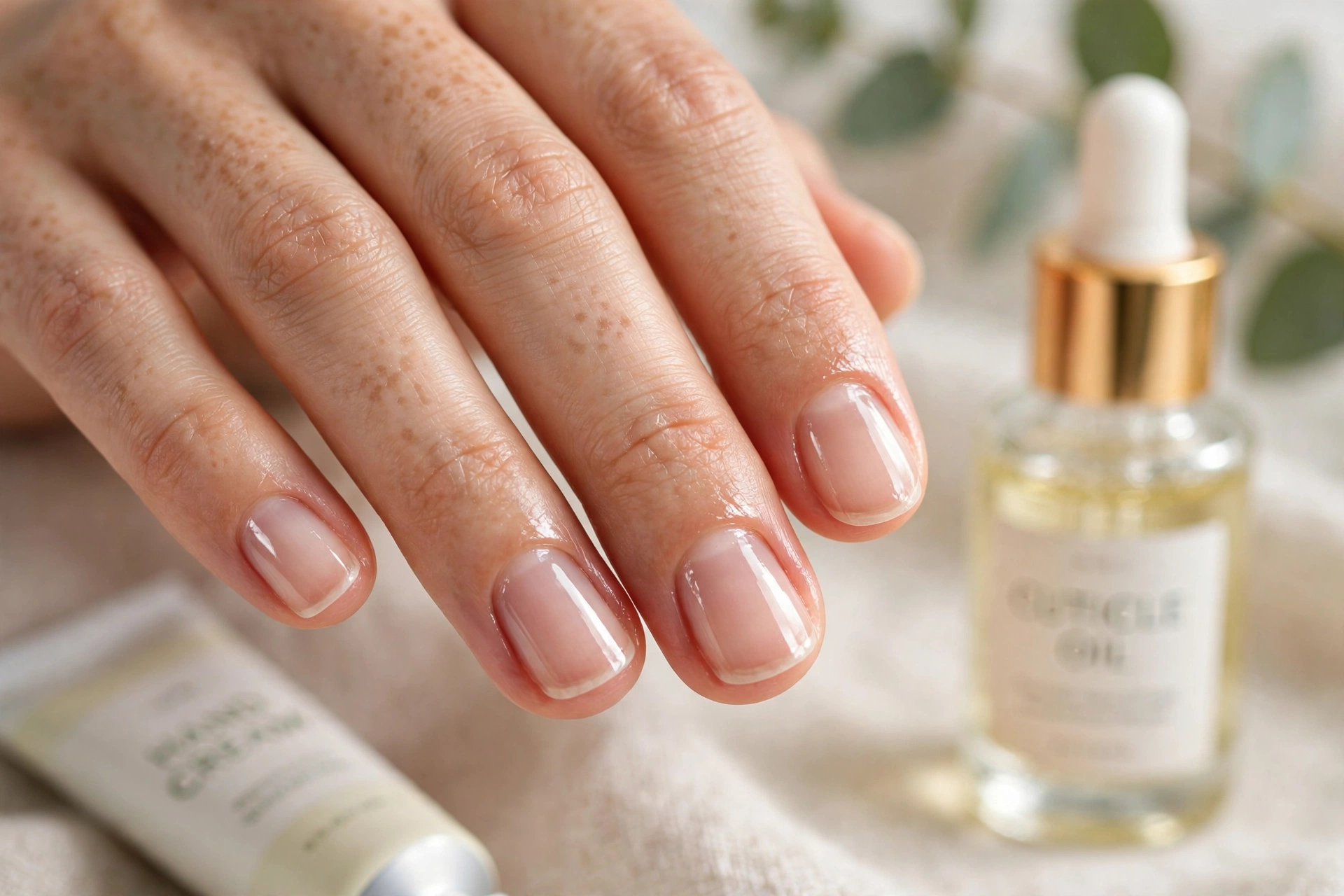
Jojoba or vitamin E oil massaged into cuticles nightly. This single habit prevents 80% of peeling and hangnails.
2. Moisturize After Every Wash
Soap strips nails like it strips skin. Hand cream after every wash keeps nails flexible instead of brittle.
3. Wear Gloves for Cleaning
Water and detergents are nail killers. Gloves for dishes, gloves for scrubbing — no exceptions.
4. Don’t Use Nails as Tools
No prying, scraping, or opening cans. Every “tool” moment causes micro-cracks that become breaks.
5. File in One Direction
Sawing back and forth frays the nail edge. File from edge to center in smooth strokes.
Strengthening Treatments
6. Try a Nail Hardener (Short-Term)
Formaldehyde-free hardeners add temporary strength. Use for 2–3 weeks max, then take a break — overuse makes nails brittle.
7. Biotin Supplements
Biotin supports keratin production. Results take 2–3 months of consistent use — it’s slow but real.
8. Protein Masks
Weekly gelatin or keratin nail soaks add temporary protein. Think of it as a hair mask for nails.
9. Keep Them Short While Recovering
Short nails break less. Grow out damage gradually instead of fighting breaks at length.
10. Take Polish Breaks
A week bare every month lets nails rehydrate. You’ll see the difference in flexibility.
Cuticle Care Done Right
11. Never Cut Cuticles
Cutting invites infection and damage. Push back gently after softening instead.
12. Soften Before Pushing
Warm water or cuticle remover for 2 minutes before pushing back. Dry pushing tears living tissue.
13. Use a Wooden Stick, Not Metal
Orangewood sticks are gentler than metal pushers. Less pressure, less damage.
14. Exfoliate Gently
A soft brush around cuticles weekly removes buildup without harshness.
15. Seal with Oil After
Oil after every cuticle session locks in the softness.
Fixing Common Problems
16. For Peeling Nails
Peeling means dehydration. Oil twice daily, keep polish on (it seals moisture in), and avoid water exposure.
17. For Splitting Nails
File splits immediately before they travel. A silk wrap or tea-bag patch bridges bad splits.
18. For Brittle Nails
Brittle usually means too dry or over-filed. More oil, less buffing, shorter length.
19. For Soft, Bendable Nails
Too much moisture. Reduce soak time, use a hardener, and keep them polished.
20. For Ridges
Gentle buffing smooths ridges, but deep ridges can signal health issues — see a dermatologist if sudden.
Habits That Sabotage Nails
21. Stop Picking and Biting
The #1 nail destroyer. Bitter polish, fidget alternatives, or short manicures break the cycle.
22. Don’t Peel Off Polish or Gel
Peeling takes nail layers with it. Always soak off properly, even when it’s satisfying.
23. Skip Aggressive Buffing
Buffing thins the nail plate. A light shine buff monthly is plenty.
24. Avoid Acetone Overuse
Acetone dehydrates severely. Use it only for removal, then oil heavily after.
25. Don’t Ignore Diet
Protein, iron, zinc, and hydration show up in your nails. Supplements help, but food comes first.
The Weekly Nail Care Routine
Once a week, give nails 15 minutes: remove polish properly, soak briefly in warm water with oil, push back cuticles, file and shape, apply treatment (hardener or oil mask), then moisturize hands fully. This weekly reset prevents most nail problems before they start — consistency beats intensity every time.
When to See a Professional
Persistent discoloration, thickening, separation from the nail bed, or dark streaks warrant a dermatologist visit — some nail changes signal health conditions. A good nail tech can also assess damage and recommend recovery plans. Don’t self-diagnose anything that looks wrong.
Nail Care Product Checklist
You don’t need a drawer full of products — a tight kit covers everything. Essentials: jojoba or vitamin E cuticle oil, a good hand cream with shea butter, a glass nail file (gentler than emery), an orangewood stick, and a quality base coat. Nice to have: a nail hardener for recovery periods, cuticle remover for weekly care, and silk wrap strips for emergency split repairs. Skip: metal cuticle pushers (too harsh), cheap files that fray edges, and “miracle growth” serums with no active ingredients. Invest in the oil and the file — they’re the two products you’ll use every single day.
Keep Your Nails Looking Great
Healthy base, beautiful finish — pair this routine with our almond nail designs for the most flattering shape, or nude nail designs for polish that shows off healthy nails.